Cultivating Critical Thinking in Children
Raising Thinkers, Not Just Learners: Cultivating Critical
Thinking in Children
Introduction: Preparing Children for a Thinking World
Every parent hopes their child will grow into someone who
asks thoughtful questions, reasons independently, and makes wise decisions. In
today’s information-rich world, however, children are exposed to more knowledge
than ever before, yet many struggle to analyse, question, and interpret what
they see or hear.
The challenge is not the availability of information—it is
learning how to process it. Children move through school assignments, daily
routines, digital media, and playtime, often without structured opportunities
to practice reasoning. Developing critical thinking therefore requires conscious
guidance from both parents and educators.
At St. Xavier’s World School, Ghaziabad, we believe that
nurturing thoughtful learners is as important as achieving academic success. As
one of the leading CBSE schools in Ghaziabad, our approach encourages students
to question, analyse, and reflect so they can grow into confident and
responsible decision-makers.
Observation: The First Step Toward Critical Thinking
Critical thinking begins with observation. Many children
tend to respond to the first piece of information they notice, without
carefully examining patterns or details. In a fast-paced world filled with
constant distractions, attention often becomes fragmented.
Encouraging children to slow down and observe their
surroundings can significantly strengthen their reasoning skills. Simple
everyday activities can become powerful learning moments.
For instance, while walking to school or spending time
outdoors, children can be encouraged to notice changes in their
surroundings-differences in weather, traffic patterns, or even the growth of
plants over time. Such exercises train the mind to detect details and recognise
patterns.
Similarly, everyday household routines can become
observation-based learning opportunities. While helping in the kitchen,
children may observe how ingredients change during cooking-what melts, what
changes colour, and what remains the same. These simple moments help children
connect actions with outcomes and build the habit of careful observation.
At St. Xavier’s World School, teachers often integrate
observation-based activities within classroom learning, helping students
develop curiosity and awareness about the world around them.
Encouraging Children to Explain Their Thinking
Observation alone is not enough; children must also learn to
explain their reasoning. Many students can arrive at an answer but struggle to
describe how they reached it. Developing this skill is essential for
strengthening analytical thinking.
Parents and teachers can support this process by asking
guided questions that encourage children to reflect on their thought processes.
For example, during homework sessions, instead of simply
checking answers, adults can ask questions such as:
What information is given in the problem?
What do you need to find out?
What step should come first?
These questions help children understand that solving a
problem is a sequence of logical steps rather than a random guess.
Playtime can also become a powerful platform for reasoning.
Activities such as building structures with blocks, solving puzzles, or
role-playing games encourage children to experiment and make decisions. Asking
simple questions like “Why did you place that piece there?” or “What changed
when you moved it?” helps children articulate their thinking.
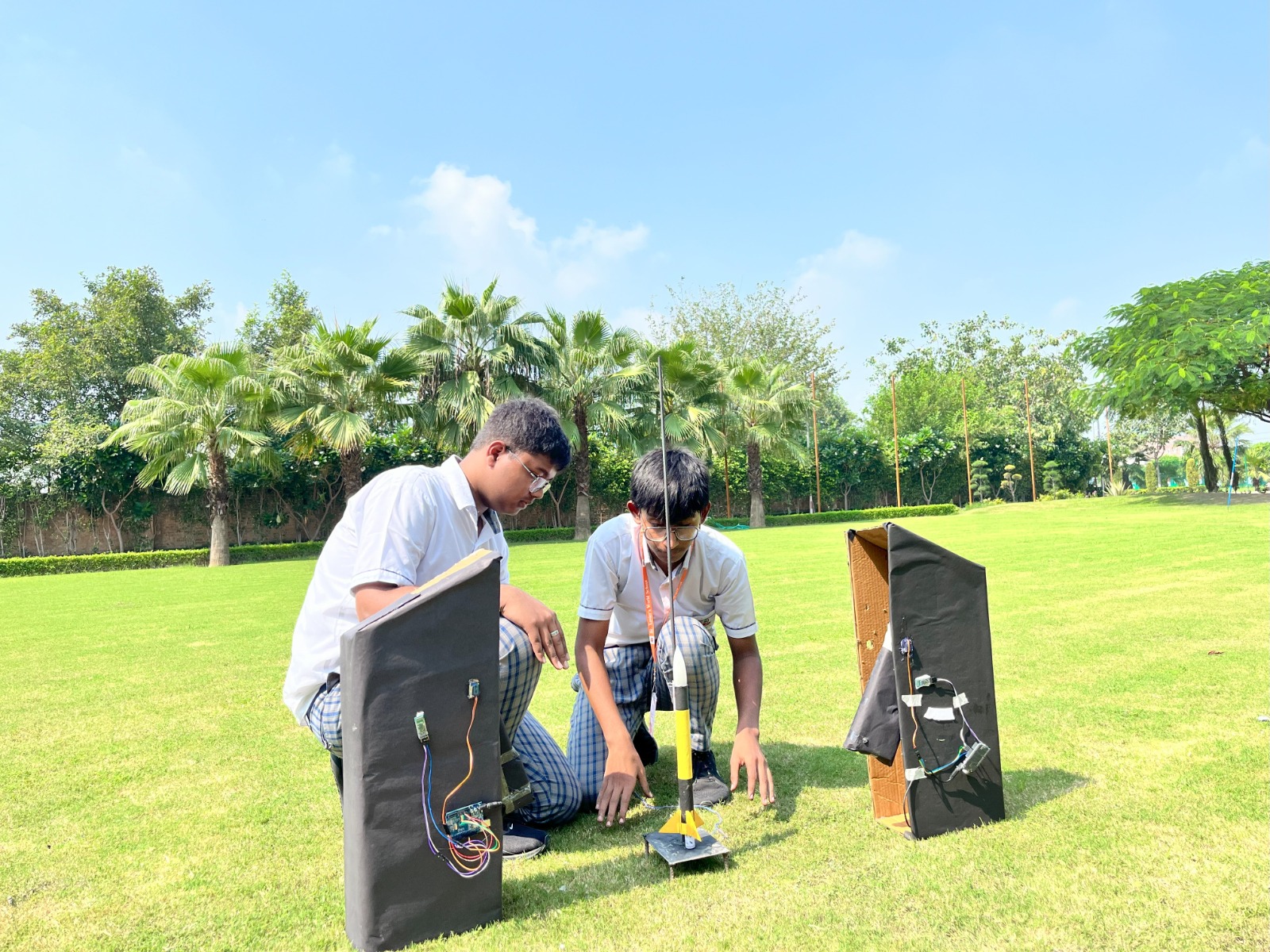
At St. Xavier’s World School, experiential learning methods
encourage students to explore, experiment, and explain their ideas,
strengthening both confidence and clarity in their reasoning.
Using Comparison to Develop Judgment
Another effective way to nurture critical thinking is
through comparison. Children often absorb information as isolated facts without
learning how to evaluate or contrast different options.
Teaching them to compare helps develop analytical judgment
and decision-making skills.
Daily family routines offer many opportunities for this
practice. For instance, when choosing snacks, children can compare two options
using simple criteria such as taste, nutrition, and cost. This introduces them
to structured decision-making.
Shopping trips or visits to markets can also become learning
experiences. Children can observe different brands, prices, packaging styles,
and product claims. Comparing these factors helps them understand how choices
are evaluated in real-world situations.
Outdoor experiences provide additional learning moments.
While visiting parks or public spaces, children may compare facilities, safety
features, or cleanliness. Similarly, while reading stories, they can compare
characters, conflicts, and endings.
Maintaining consistent criteria during comparison helps
children learn how to make reliable judgments. This skill becomes particularly
valuable in academic learning, where students must evaluate information and
develop reasoned conclusions.
Integrating Critical Thinking in School Education
Schools play a crucial role in strengthening these habits of
observation, reasoning, and comparison. When classroom learning moves beyond
memorization to inquiry-based exploration, students develop deeper
understanding and stronger intellectual confidence.
At St. Xavier’s World School, Ghaziabad, teaching practices
focus on encouraging curiosity, questioning, and problem-solving. Through
project-based learning, collaborative activities, and interactive discussions,
students are guided to think independently and express their ideas clearly.
Such an approach prepares students not only for academic
success but also for the complex challenges of the modern world.
Supporting Critical Thinking at Home and School
When families and schools work together, children receive
consistent encouragement to think critically. Parents can reinforce these
skills by engaging children in discussions, encouraging questions, and allowing
them to explore solutions independently.
Over time, parents often notice meaningful changes. Children
begin to explain their choices more clearly, accept responsibility for
outcomes, and adjust their behaviour based on past experiences. These signs
indicate that critical thinking has become a natural part of their decision-making
process.
Conclusion: Building Confident Thinkers for the Future
In the rapidly changing world of today, knowledge alone is