Deep Learning vs Surface Learning in Academic
Difference Between Deep Learning and Surface Learning in Academic Success
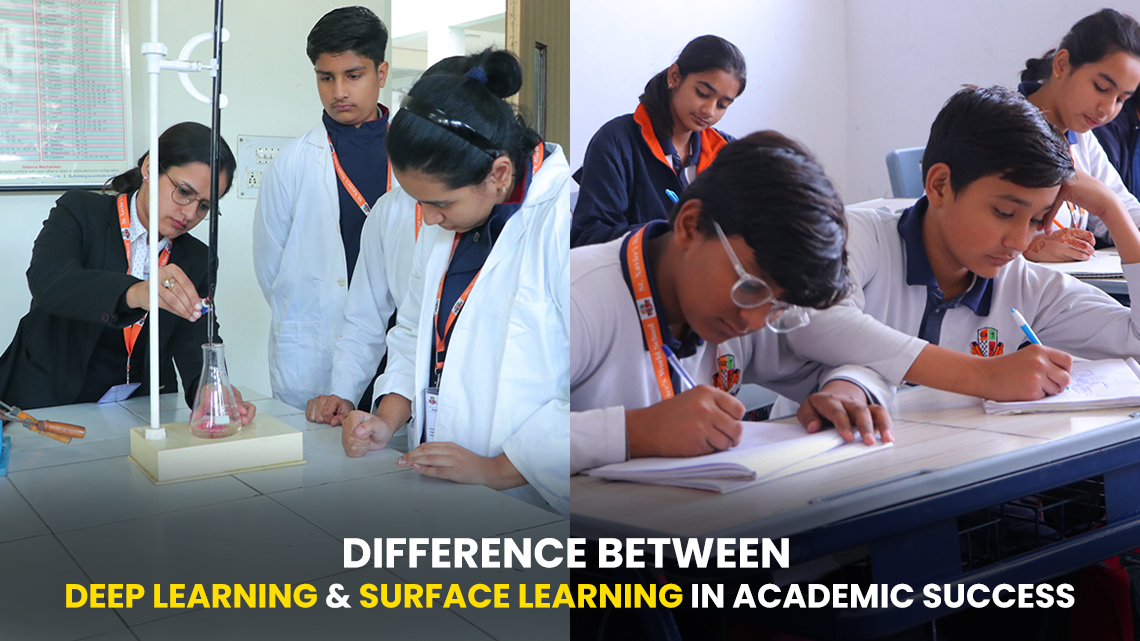
Introduction: Understanding Different Learning ApproachesAll students study the same topics and subjects as per their class. But the methods they learn are different. Some students focus on passing exams, while others focus on actually understanding the topic and using it for exams and later in life.
These two approaches are known as deep learning and surface learning. But what is important is to choose the best approach between these two, which is why, in this blog, we will discuss deep learning and surface learning, their benefits and challenges, and which one to choose.
What Is Surface Learning?Surface learning is a learning approach in which students focus on memorizing rather than understanding the concept. This method is usually used by students preparing the day before exams or assignments, rather than to gain a clear and meaningful understanding of the subject.
Students who follow this approach tend to rely on rote memorization, repeat facts without questioning them, and avoid exploring topics in detail. While this approach may help achieve short-term academic results, it often leads to poor knowledge retention and difficulty in applying concepts in real-life situations.
What Is Deep Learning?
Deep Learning is a learning approach in which students focus on understanding the concept deeply rather than just memorizing it. In this method, the goal is to understand the meaning behind ideas, connect different topics, and apply knowledge in real-life situations.
Students who practice deep learning ask questions, explore different perspectives, and think critically about what they learn. This approach helps them build strong conceptual clarity, retain information for longer, and develop problem-solving skills that are essential for academic success and future growth.
Here are some points that will explain the importance of deep learning for academic success:
1. Improves Conceptual Understanding
Deep learning helps students understand the topic rather than just memorizing facts. This leads to better clarity, a stronger academic foundation, and curiosity to explore more.
2. Enhances Problem-Solving Skills
Students who learn by understanding the topic are more likely to analyze situations, think critically, and solve complex problems more effectively.
3. Supports Long-Term Retention
The concepts understood through deep learning stay in memory for longer, helping students perform better in exams and future studies.
4. Encourages Independent Thinking
Deep learning allows students to form their own opinions, explore ideas, and become confident, independent learners.
5. Prepares Students for Future Challenges
By focusing on understanding and application, deep learning equips students with the skills needed for higher education and real-world situations.
Challenges of Surface Learning
Here are some challenges that students usually face after using surface learning:
1. Leads to Rote Memorization
Surface learning usually leads to rote memorization because the concepts are not clear, limiting a student's overall academic performance and curiosity to learn more.
2. Weak Conceptual Understanding
Students often struggle to understand the “why” behind topics, leading to confusion when subjects become more advanced.
3. Poor Knowledge Retention
The information learned only for exams does not last long and is easily forgotten afterwards, making it difficult to build a strong academic foundation.
4. Difficulty in Applying Knowledge
When knowledge is gained through memorization, it fades away with time, making it hard to apply in further studies or real-life situations.
5. Increased Academic Stress
Relying on last-minute memorization creates pressure and anxiety, especially during exams, affecting overall performance.
How Schools Can Shift from Surface to Deep Learning?
Schools can transition from surface learning to deep learning by focusing on design thinking-based education and student-centered teaching methods. Most schools use memorization-based learning, which leads to rote memorization. Instead, teachers can design lessons that help students understand the “why” behind every topic.
Another effective approach is activity-based and project-based learning, where students actively participate in solving problems and exploring ideas. Group discussions, presentations, and collaborative tasks encourage students to think critically, ask questions, and engage deeply with the subject rather than passively learning it.
St Xavier’s World School promotes deep learning by creating a supportive environment that values curiosity and exploration. Encouraging open-ended questions, providing constructive feedback, and allowing students to learn at their own pace helps them build confidence and develop a deeper understanding.
Conclusion: The Conversion from Surface Learning to Deep Learning
Transitioning from surface learning to deep learning is essential in a student's life. While surface learning may help achieve short-term results, deep learning truly builds strong foundations, enhances critical thinking and curiosity to explore, and prepares students for real-world challenges.
In today’s evolving world, focusing on conceptual understanding and practical application is more important than ever. Deep learning improves academic performance and develops confidence and problem-solving abilities.
At St. Xavier’s World School, we believe in going beyond memorization by encouraging students to think, question, and understand deeply. With a focus on concept-based and interactive learning, we prepare students to achieve academic success and excel in the future. Contact St. Xavier’s World School to help your children move from memorization to meaningful learning, where true education begins.
FAQs: Difference Between Deep Learning and Surface Learning
1. What is the difference between surface learning and deep learning?
Ans: Surface learning means memorizing the information rather than understanding it, limiting it to only for exams and assignments. On the other hand, deep learning means understanding the concept, then using it for the exams and real life.
2. What is the 70 30 rule in teaching?
Ans: The 70 30 rule in teaching means using activity-based learning for 70% of class time and using direct learning for only 30% of the class time.