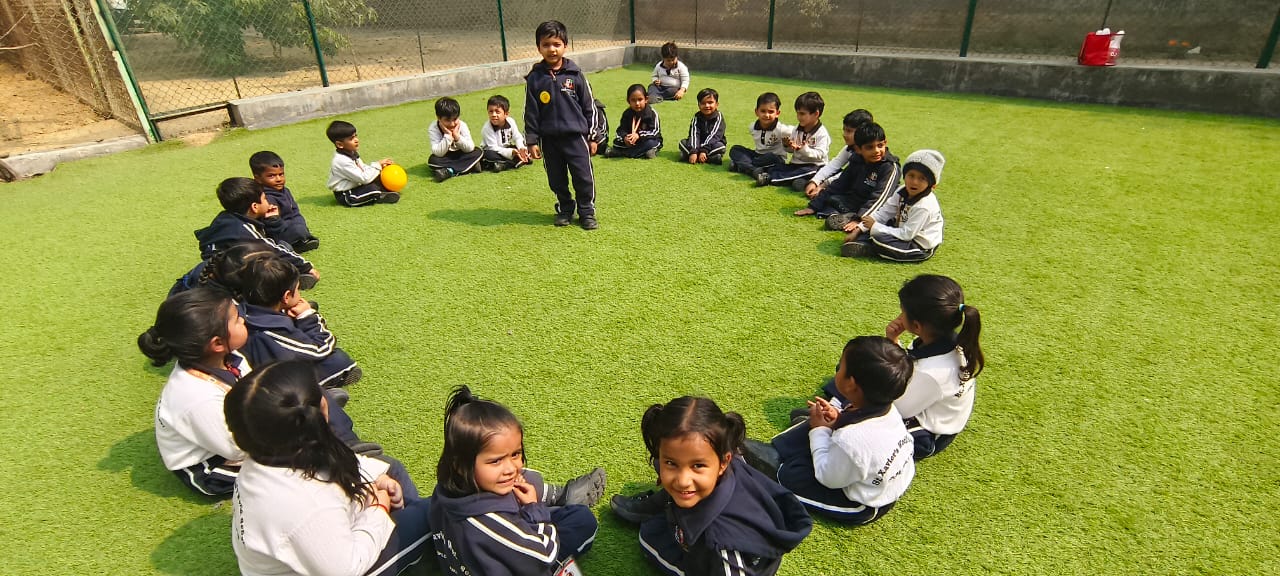
Learning Beyond the Classroom
Learning Beyond the Classroom: How Play Shapes a Child’s Growth at St. Xavier’s World School, Ghaziabad
Understanding the Real Journey of Childhood
Childhood development is rarely a straight line. A child may
progress quickly one day and seem to pause or step back the next. Yet each
moment—whether of exploration, curiosity, or quiet observation-contributes to
growth. Recognizing this natural rhythm of development is essential for
meaningful education.
At St. Xavier’s World School, Ghaziabad, we believe that
every child grows in their own unique way. As one of the leading CBSE schools
in Ghaziabad, our approach blends structured academic learning with
opportunities for exploration and play. This balance ensures that children
develop not only academically but also emotionally, socially, and creatively.
Children are naturally curious and imaginative. When they
are given the freedom to explore their interests and ideas, they develop
confidence, creativity, and a love for learning that lasts a lifetime.
Why Play is Essential for Early Learning
Play is often seen simply as a break from studies, but in
reality, it is one of the most powerful tools for learning. During their early
years, children learn best through hands-on experiences, experimentation, and
imagination.
Free play allows children to explore the world around them
without pressure or rigid instructions. When they choose activities on their
own, they develop independence, creativity, and problemsolving skills.
At St. Xavier’s World School, we recognize the immense value
of play in education. Our learning environment encourages students to engage in
both guided activities and independent play so that they can grow
intellectually while enjoying the process of discovery.
Encouraging Creativity and Imagination
When children are allowed to explore freely, their
imagination flourishes. A simple activity like drawing, building blocks,
storytelling, or role-playing can transform into a creative journey where
children invent ideas and experiment with possibilities.
Such experiences stimulate innovation and encourage children
to think beyond conventional boundaries. Creative thinking developed during
childhood often becomes the foundation for problem-solving abilities later in
life.
At St. Xavier’s World School, classrooms and activity spaces
are designed to inspire curiosity. Students are encouraged to imagine, create,
and express themselves through art, projects, and collaborative activities,
making learning both engaging and meaningful.
Strengthening Cognitive and Problem-Solving Skills
Free play often involves trial and error. Children
experiment, make mistakes, learn from them, and try again. Whether solving
puzzles, constructing models, or engaging in imaginative games, they are
constantly developing cognitive skills.
These activities help children sharpen their reasoning
abilities, improve concentration, and build analytical thinking. Such skills
are essential not only for academic success but also for navigating real-life
challenges.
Our curriculum at St. Xavier’s World School integrates
experiential learning methods that stimulate curiosity and encourage students
to ask questions. This approach ensures that learning goes beyond memorization
and promotes deeper understanding.
Developing Social and Communication Skills
One of the most valuable aspects of play is the opportunity
for social interaction. When children play together, they learn how to
communicate, cooperate, and share responsibilities.
Group activities help them understand teamwork, empathy, and
respect for others. They also learn how to resolve disagreements and express
their thoughts effectively—skills that are essential for building healthy
relationships.
At St. Xavier’s World School, children interact with peers
in classrooms, playgrounds, and activity zones where collaboration becomes a
natural part of learning. These interactions help them build confidence and develop
meaningful friendships.
Building Confidence and Independence
Play also nurtures a child’s sense of independence. When
children explore new activities on their own, they discover their abilities and
develop confidence in their decisions.
Completing a puzzle, mastering a sport, or successfully
building something from scratch gives children a sense of accomplishment. These
small victories strengthen their self-esteem and encourage them to take on new
challenges.
Our educators at St. Xavier’s World School guide students
while allowing them the freedom to experiment and learn from their experiences.
This supportive environment helps children become confident, resilient
learners.
Holistic Development for a Balanced Future
True education focuses on the overall development of a
child. Academic knowledge alone cannot shape a confident and capable
individual. Physical activity, creativity, emotional awareness, and social
skills all contribute to a child’s growth.
Through a balanced curriculum, St. Xavier’s World School
ensures that students participate in academics, sports, creative arts, and
extracurricular activities. This holistic approach allows children to discover
their interests and talents while maintaining a healthy balance between
learning and play.
By encouraging diverse experiences, we prepare students to
become well-rounded individuals ready to face the challenges of the future.
A Message to Parents: Celebrate the Power of Play
Parents often wonder whether children are learning enough
when they spend time playing. However, play is not a distraction from
learning—it is an essential part of it.
When children immerse themselves in imaginative activities,
they are developing skills that cannot be taught through textbooks alone. They
are learning to think independently, interact socially, and approach challenges
creatively.
At St. Xavier’s World School, we work closely with parents
to ensure that every child’s growth journey is supported both at school and at
home.
Why Choose St. Xavier’s World School, Ghaziabad
As one of the top CBSE schools in Ghaziabad, St. Xavier’s
World School offers:
A balanced approach that combines academic excellence with
creative exploration
A nurturing and safe learning environment for every child
Modern teaching methodologies that encourage curiosity and
engagement
Excellent infrastructure for academics, sports, and
extracurricular activities
Experienced educators dedicated to guiding students toward
holistic development
Conclusion: In