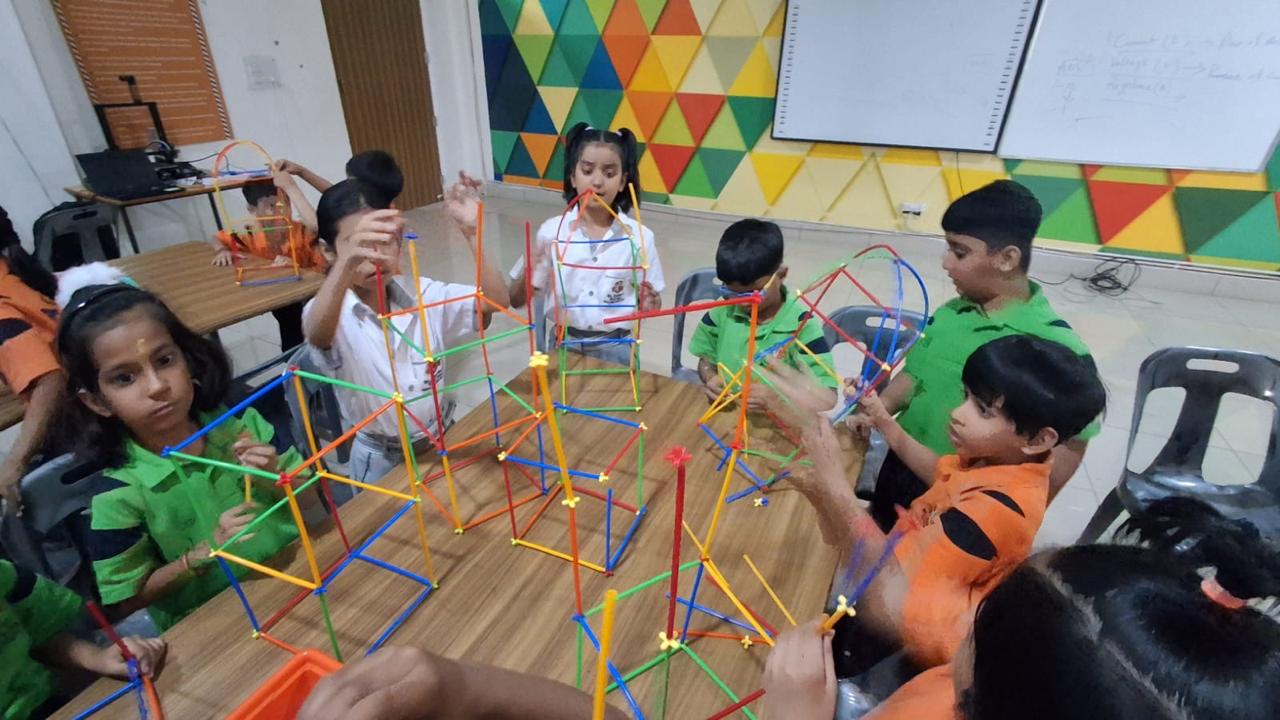
Learning Through Curiosity
Learning Through Curiosity: How Inquiry-Based Education Nurtures Future-Ready Learners
Introduction: Turning Questions into Opportunities for LearningChildren are naturally curious. They constantly ask "why," "how," and "what if?" These questions are not distractions from learning-they are the very foundation of meaningful education. When students are encouraged to explore, investigate, and discover answers for themselves, learning becomes more engaging, memorable, and purposeful.
At St. Xavier's World School, Ghaziabad, we believe that education should inspire curiosity rather than simply deliver information. Our approach encourages students to become active participants in their learning journey through inquiry-based learning-a teaching methodology that develops critical thinking, creativity, collaboration, and problem-solving skills, preparing students for success in an ever-evolving world.
What is Inquiry-Based Learning?
Inquiry-Based Learning (IBL) is an educational approach that places students at the centre of the learning process. Instead of relying solely on lectures and memorisation, students are encouraged to ask questions, investigate ideas, conduct research, analyse information, and draw their own conclusions.
Rather than providing ready-made answers, teachers act as facilitators who guide students through exploration and discovery. This process helps learners develop a deeper understanding of concepts while cultivating confidence and independence.
By transforming curiosity into meaningful learning experiences, inquiry-based education makes classrooms more interactive and intellectually stimulating.
Building Curious and Independent Thinkers
Inquiry-based learning begins with a simple yet powerful principle: every question is an opportunity to learn.
Students are encouraged to:
Observe and investigate real-life situations.
Ask thoughtful questions.
Explore multiple perspectives.
Test ideas through research and experimentation.
Reflect on their findings and share their learning.
This student-centred approach empowers children to take ownership of their education and become active, self-motivated learners.
Developing Skills for the 21st Century
Today's world demands much more than academic knowledge. Students need the ability to think critically, communicate effectively, collaborate with others, and adapt to changing circumstances.
Inquiry-based learning naturally develops these essential skills.
Critical Thinking and Problem-Solving
Instead of memorising facts, students learn how to analyse information, identify patterns, evaluate evidence, and solve complex problems logically.
Creativity and Innovation
Exploring different possibilities encourages students to think creatively and develop original ideas. Innovation often begins with curiosity and the confidence to ask "What if?"
Communication and Collaboration
Group investigations, discussions, and presentations teach students how to work effectively with others, express their ideas clearly, and respect diverse viewpoints.
Research and Information Literacy
Students learn how to gather reliable information, verify sources, organise data, and draw meaningful conclusions-skills that are invaluable in higher education and future careers.
Making Learning Meaningful and Engaging
Children learn best when they understand the purpose behind what they are studying.
Inquiry-based learning connects classroom concepts with real-world experiences through:
Science experiments
Research projects
Field observations
Case studies
Collaborative activities
Community-based learning
These experiences make learning enjoyable while helping students retain concepts more effectively. Rather than simply preparing for examinations, students develop a genuine love for learning that stays with them throughout life.
The Teacher's Role: Guiding Rather Than Giving Answers
In an inquiry-based classroom, teachers become mentors and facilitators instead of traditional lecturers.
Their role includes:
Creating a safe environment where questions are welcomed.
Designing meaningful learning experiences.
Encouraging exploration and independent thinking.
Providing guidance without limiting creativity.
Supporting students as they reflect on their learning.
This collaborative relationship builds confidence and encourages students to become lifelong learners.
Creating a Culture of Curiosity
For inquiry-based learning to flourish, schools must foster an environment where curiosity is celebrated.
At St. Xavier's World School, Ghaziabad, we encourage students to:
Ask thoughtful questions without hesitation.
Learn through experimentation and observation.
View mistakes as valuable learning opportunities.
Work collaboratively to solve challenges.
Apply classroom knowledge to real-life situations.
Such an environment inspires students to become inquisitive thinkers who approach every challenge with confidence and enthusiasm.
Preparing Students for an Evolving Future
The careers of tomorrow will require individuals who can innovate, adapt, and solve problems that may not even exist today. Success will depend less on memorised information and more on the ability to think independently and continuously learn.
Inquiry-based learning equips students with exactly these capabilities. It nurtures resilience, adaptability, leadership, and intellectual curiosity-qualities that enable young learners to thrive in higher education, professional careers, and everyday life.
By encouraging students to question, explore, and discover, schools prepare them not only for examinations but also for lifelong success.
Conclusion: Inspiring Lifelong Learners
Education should do more than provide answers-it should inspire students to ask meaningful questions. Inquiry-based learning transforms classrooms into spaces of exploration, creativity, and innovation, where every child is encouraged to think deeply and learn with purpose.
At St. Xavier's World School, Ghaziabad, we are committed to creating learning experiences that spark curiosity, nurture confidence, and develop future-ready skills. By placing students at the heart of the learning process, we empower them to become independent thinkers, compassionate leaders, and lifelong learners.
Because the greatest education is not about knowing all the answers-it is about developing the curiosity and confidence to keep asking the right questions.