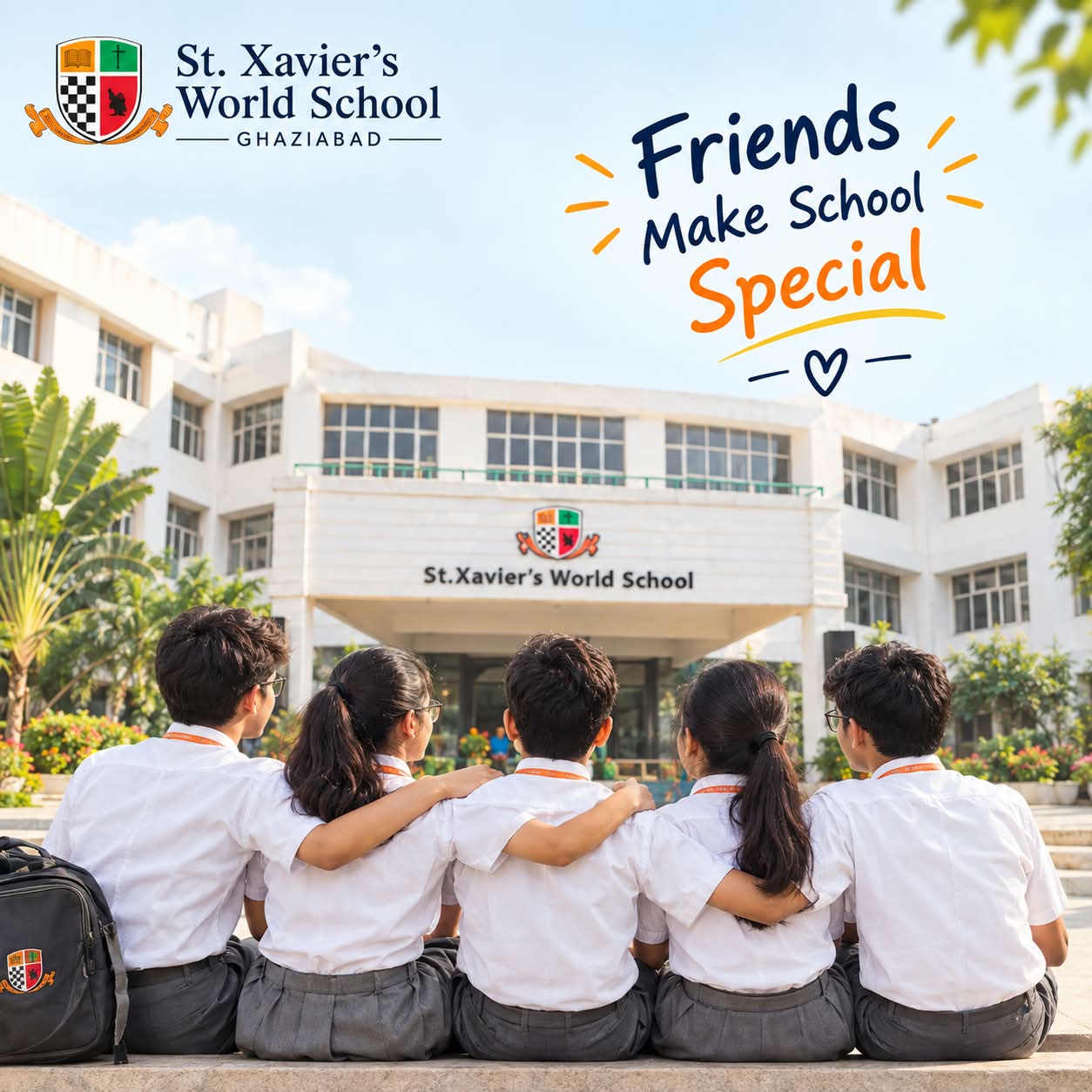
More Than Friends
More Than Friends: How School Friendships Help Children Learn, Grow and Thrive
When we talk about a child’s education, academic performance often takes centre stage. Grades, examinations, achievements and classroom learning are important, but a child’s school experience is shaped by much more than academics. Some of the most meaningful lessons happen during conversations with classmates, teamwork on a project, playing together during breaks or simply sharing a laugh with a friend.
School friendships are an important part of growing up. They provide children with companionship, but their value goes much deeper. Positive friendships help children develop emotional intelligence, communication skills, empathy, confidence and resilience. They can also create a stronger sense of belonging, which can positively influence a child’s overall school experience.
At St. Xavier’s World School, Ghaziabad, we believe that meaningful relationships are an essential part of holistic education.
How Do School Friendships Develop?
Strong friendships rarely develop instantly. They grow through shared experiences, regular interaction, trust and mutual understanding. School provides children with a natural environment to meet peers, discover common interests and learn how to build relationships.
A friendship may begin because two children enjoy the same sport, sit together in class, share an interest in books or music, or simply enjoy spending time together.
Shared Experiences Create Strong Bonds
Working together on a science project, preparing for a school event, participating in a sports competition or studying for an examination can bring students closer. Achieving something together creates a sense of accomplishment, while overcoming challenges teaches children to rely on and support one another.
Everyday Interaction Builds Trust
Friendship is often built through ordinary moments-talking before class, sitting together during lunch, working in groups or playing during a break. Regular interaction gives children opportunities to understand one another and gradually develop trust and comfort.
Inclusive Environments Encourage Connection
Children are more likely to develop healthy friendships when they feel accepted and respected. Schools that encourage kindness, empathy, cooperation and inclusion create an environment where students can express themselves comfortably and learn to appreciate differences.
How Friendships Support Emotional Development
Friendships give children opportunities to understand their own emotions and respond to the feelings of others.
When a friend is upset, children learn empathy. When disagreements occur, they learn that conflicts can be resolved through communication and compromise. When a friend succeeds, they learn to celebrate someone else’s achievement.
These everyday experiences help children develop emotional awareness and interpersonal skills that remain valuable throughout their lives.
Learning Important Social Skills Through Friendship
Children learn many social skills by interacting with their peers. They learn to listen, take turns, share, cooperate, apologise, negotiate and respect different opinions.
Not every interaction will be perfect-and that is part of the learning process. With appropriate guidance from adults, children can learn that disagreements do not necessarily mean the end of a friendship. Instead, they can become opportunities to understand another person’s perspective and find constructive solutions.
Can Friendships Influence Academic Success?
A positive peer environment can also support a child’s academic engagement. Friends may encourage one another to participate in class, complete assignments, prepare for assessments or take part in school activities.
When children feel comfortable and connected at school, they may be more willing to participate, ask questions and seek help when they face difficulties. A sense of belonging can therefore contribute to a more positive attitude towards learning.
The goal is not to make friendship a competition or an academic strategy, but to recognise that children learn better when they feel secure, connected and supported.
Friendships and Emotional Well-Being
School life can sometimes bring challenges-academic pressure, disagreements, changes in friendships or moments of self-doubt. Having a trusted friend can help a child feel less alone during difficult moments.
A caring peer relationship can provide encouragement, companionship and a sense of belonging. At the same time, children should also know that serious emotional concerns should be shared with trusted adults such as parents, teachers or school counsellors.
Creating spaces for conversation, cooperative activities and healthy conflict resolution can help students develop stronger social and emotional foundations.
How Parents Can Encourage Healthy Friendships
Parents do not need to choose their child’s friends, but they can help children understand what makes a healthy friendship.
Parents can:
Talk about qualities such as kindness, honesty, respect and trust.
Take an interest in their child’s friends without becoming intrusive.
Encourage children to communicate openly about friendship-related concerns.
Watch for significant changes in behaviour, mood, confidence or school attendance.
Teach children to respect personal boundaries and differences.
Model respectful communication and constructive conflict resolution at home.
Most importantly, parents can reassure children that friendships may change as they grow-and that changing interests or friendships is a normal part of growing up.
Schools Can Help Friendships Flourish
Schools can create opportunities for meaningful peer interaction through collaborative projects, sports, clubs, performing arts, group activities, student leadership programmes and experiential learning.
At St. Xavier’s World School, Ghaziabad, opportunities for students to learn and participate together help create a school environment where collaboration, respect and mutual support can flourish. Such experiences complement academic learning and contribute to the development of confident and socially responsible individuals.
Building Connections That Last Beyond the Classroom
School friendships are much more than a pleasant part of childhood. They provide children with opportunities to practise empathy, communication, cooperation, resilience and emotional awareness.
The friendships children form during their school years can become some of their most memorable experiences. More importantly, the skills they develop through these relationships can shape how they interact with others throughout life.
At St. Xavier’s World School, Ghaziabad, we believe that education is not only about what children learn from books, but also about how they learn to understand, respect and connect with the people around them. When children feel that they belong, they are better equipped to learn, grow and thrive.