Rethinking Success in Modern Education
Introduction: Rethinking Success in Modern Education
For decades, student success was measured by marks, percentages, and ranks. A report card often became the defining measure of ability, confidence, and potential. However, as education evolves to meet the demands of a dynamic global environment, progressive CBSE schools are shifting their focus from marks to mastery.
At St. Xavier’s World School, Ghaziabad, we believe that true education goes beyond numbers. As a CBSE-affiliated institution, we align with the board’s progressive reforms that emphasize competency-based learning, conceptual clarity, and holistic growth. The shift from marks to mastery is not about eliminating assessments—it is about redefining what meaningful assessment looks like.
Why Traditional Grading Alone Is No Longer Enough
Marks were originally designed to standardize evaluation. While they provide a quick snapshot of performance, they often fail to capture deeper learning outcomes such as creativity, collaboration, communication, and critical thinking.
Traditional grading systems can sometimes:
Encourage short-term memorization rather than long-term understanding
Create unhealthy competition and performance anxiety
Overlook individual learning styles and strengths
Label students instead of nurturing their potential
In today’s world, where adaptability and problem-solving matter more than rote recall, education must focus on mastery of skills and concepts rather than just examination scores.
CBSE’s Progressive Approach to Competency-Based Education
The Central Board of Secondary Education (CBSE) has been actively promoting competency-based learning and application-oriented assessments. The emphasis is increasingly on understanding concepts deeply and applying them in real-life contexts.
Mastery-based learning ensures that students:
Fully understand a concept before progressing further
Receive constructive feedback for improvement
Get multiple opportunities to strengthen their learning
Focus on application and reasoning rather than memorization
At St. Xavier’s World School, Ghaziabad, we integrate these principles into classroom practices. Our aim is to help students master subjects step by step, ensuring strong foundations and lasting knowledge.
Redesigning Assessments for Real Learning
Assessment methods in progressive CBSE schools are evolving. While board examinations remain important, classroom assessments are becoming more diverse and student-centered.
Some of the innovative assessment practices include:
Project-based learning that connects classroom knowledge with real-world challenges
Activity-based evaluations that test understanding through application
Portfolio assessments showcasing continuous growth
Open-ended questions that encourage analytical thinking
These approaches provide a more comprehensive picture of a child’s abilities. Instead of focusing solely on “how much” a student scores, the emphasis shifts to “how well” the student understands and applies knowledge.
The Role of Teachers as Learning Mentors
In a mastery-driven classroom, the teacher’s role extends beyond delivering lessons and assigning grades. Educators become mentors and facilitators of learning.
At St. Xavier’s World School, our teachers:
Monitor individual progress closely
Provide timely and personalized feedback
Identify learning gaps and offer targeted support
Encourage inquiry, discussion, and reflection
This supportive environment strengthens teacher-student relationships and ensures that learning becomes a collaborative journey rather than a one-sided evaluation process.
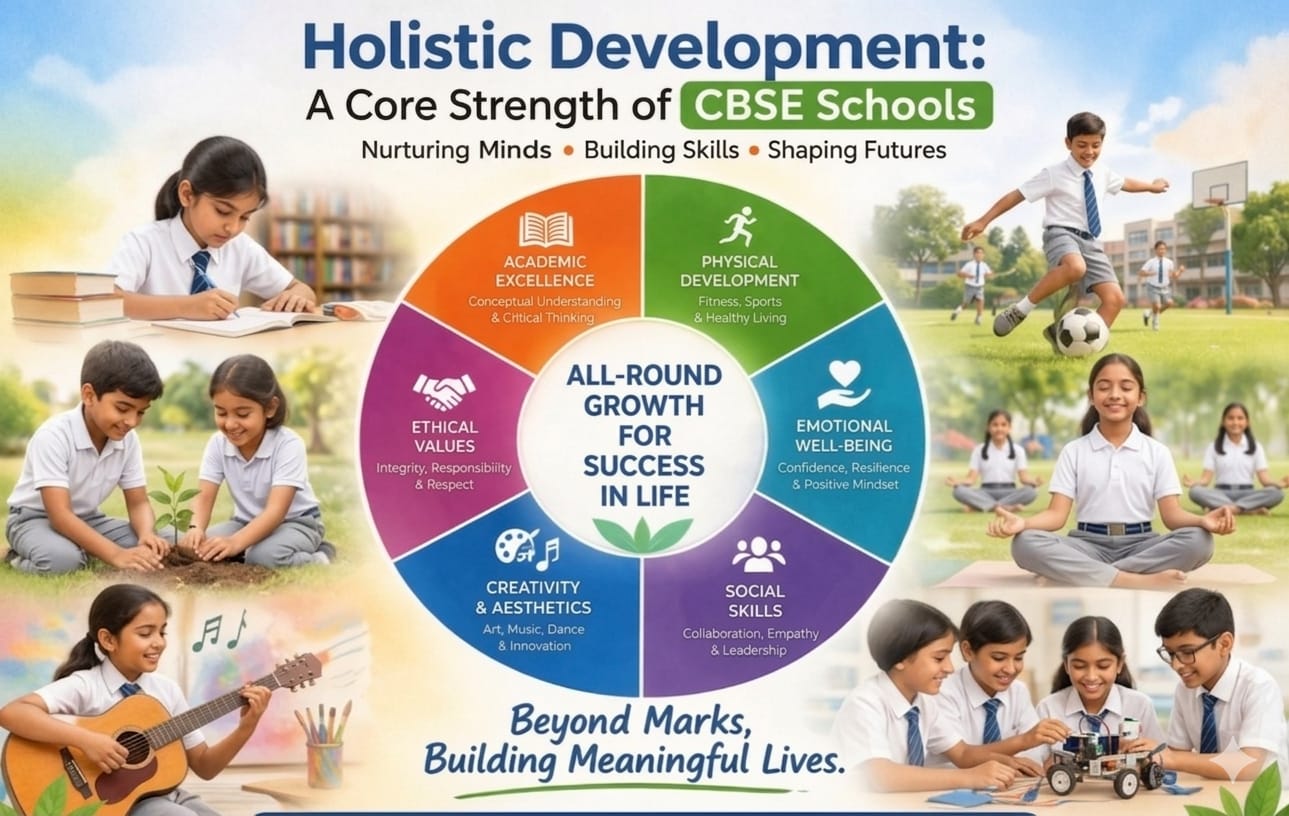
Holistic Development: A Core Strength of CBSE Schools
One of the major merits of CBSE-affiliated schools is their strong emphasis on holistic development. Education is not confined to academics alone; it includes sports, arts, life skills, and value-based learning.
At St. Xavier’s World School, Ghaziabad, students benefit from:
A wide range of indoor and outdoor sports
Cultural and creative platforms
Leadership-building activities
Community engagement initiatives
This balanced framework ensures that students develop confidence, resilience, teamwork, and ethical values—qualities that are essential for lifelong success.
Preparing Students for Competitive and Global Opportunities
A common question parents ask is whether a mastery-focused approach prepares students for competitive exams. The answer is yes. In fact, students with strong conceptual clarity and problemsolving skills often perform better in competitive environments.
CBSE’s structured syllabus, aligned with national-level entrance examinations, ensures academic rigor. When combined with mastery-based classroom practices, students gain both examination readiness and real-world competence.
At St. Xavier’s World School, we prepare students not just to excel in board exams but to confidently face higher education challenges and future careers.
Blending Tradition with Innovation
The transition from marks to mastery does not mean abandoning traditional grading entirely. Instead, progressive CBSE schools are adopting balanced models that combine academic evaluation with skill-based assessment.
This blended approach ensures:
Academic credibility
Reduced exam-related stress
Deeper engagement with subjects
Continuous improvement and reflection
Such a system maintains the strengths of structured evaluation while embracing modern educational practices.
Conclusion: Mastery as the New Measure of Success
The future of education lies in nurturing learners who think critically, adapt confidently, and apply knowledge meaningfully. The shift from marks to mastery reflects a powerful transformation in how we define success.
As a proud CBSE-affiliated institution, St. Xavier’s World School, Ghaziabad, embraces this progressive vision. We believe that education is not about competing for ranks but about building competence, character, and confidence.
By focusing on mastery, we empower students to move beyond scores and become lifelong learners -ready not just for examinations, but for life itself.